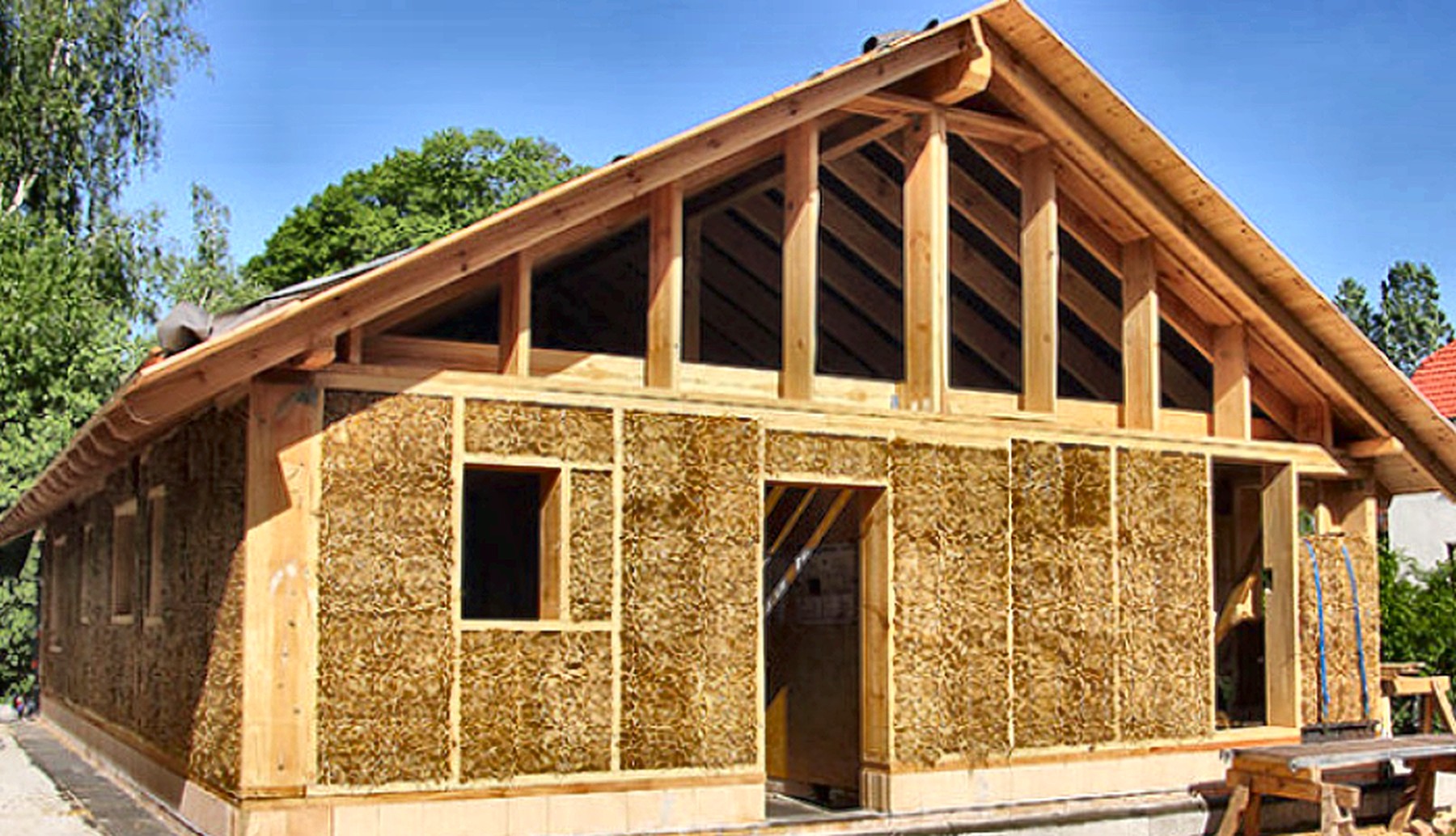
 Hillside Home · Custom Homes
The house that makes more energy than it lives on
View the build The Gable House · Custom Homes
Straw that follows the roofline all the way up
View the build Courtyard House · Custom Homes
Finished, and indistinguishable from any other house
View the build Masonry Retrofit · Renovations + Additions
An old house, brought up to a standard it could never reach inside
View the build Weathertight Shell · Special Projects
A shell in days, not months
View the build Garden Studio · Special Projects
One room, built to the same wall as the house
View the build Visitor Pavilion · Commercial
Two hours of fire resistance, on paper
View the buildTogo & Alpha
They arrived from Alaska already wearing the answer.
Togo is the larger, darker male; Alpha the lighter female. They are Alaskan Malamutes — animals engineered by a few thousand years of Arctic winter — and they spend their summers in Greek Macedonia. That sounds like a mistake until you understand how their coat actually works. It is the same principle we build walls out of.
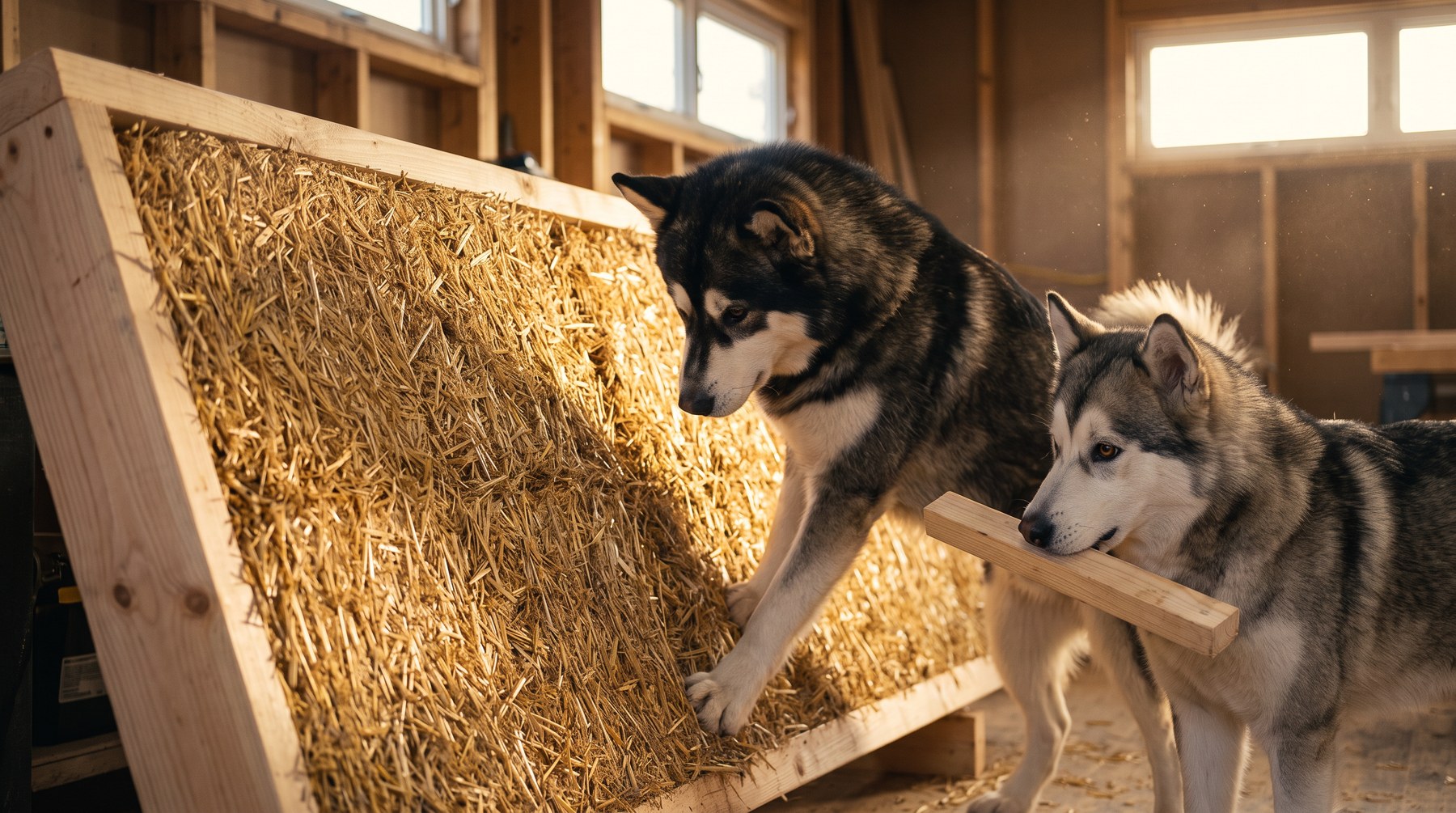
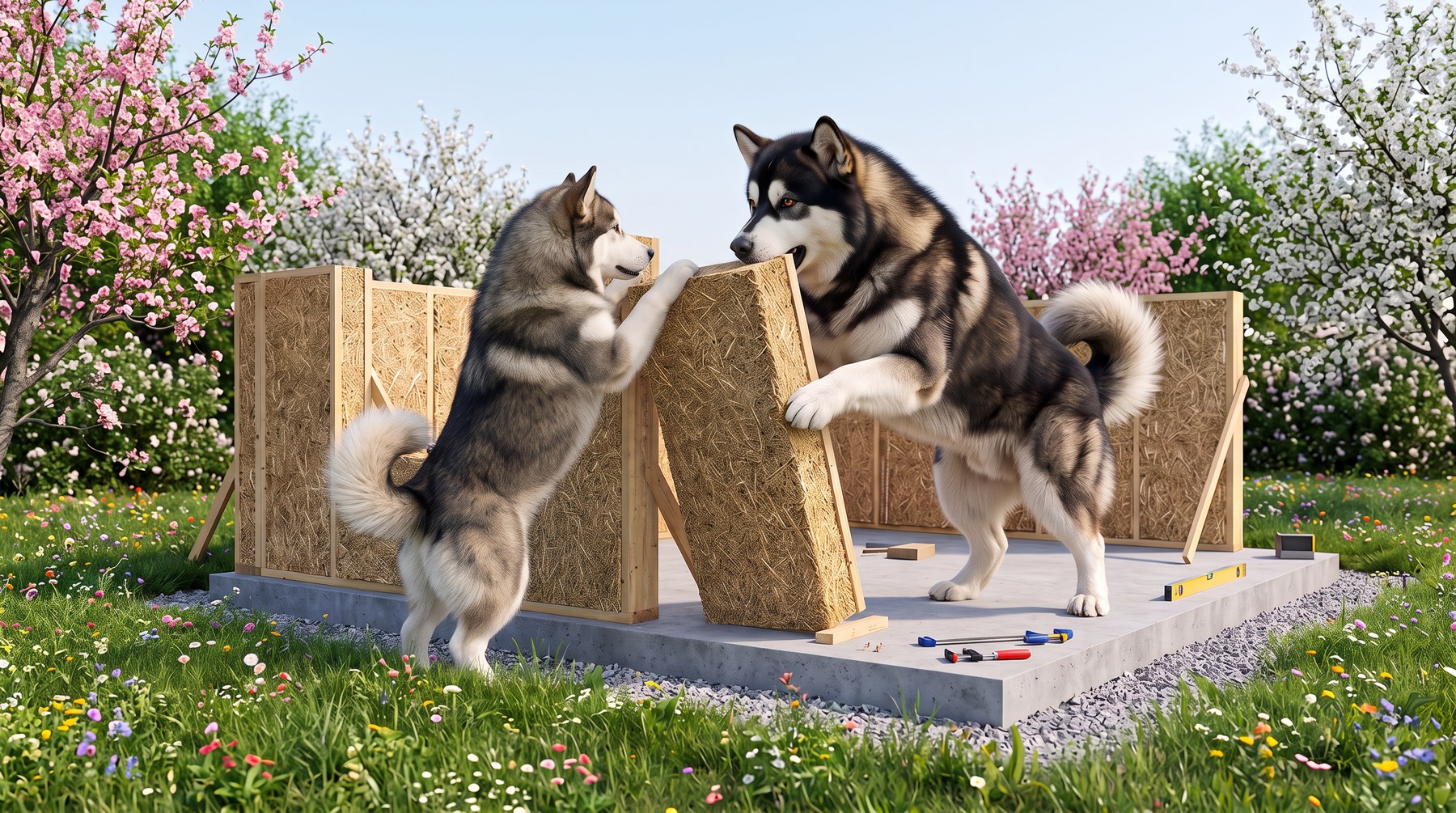
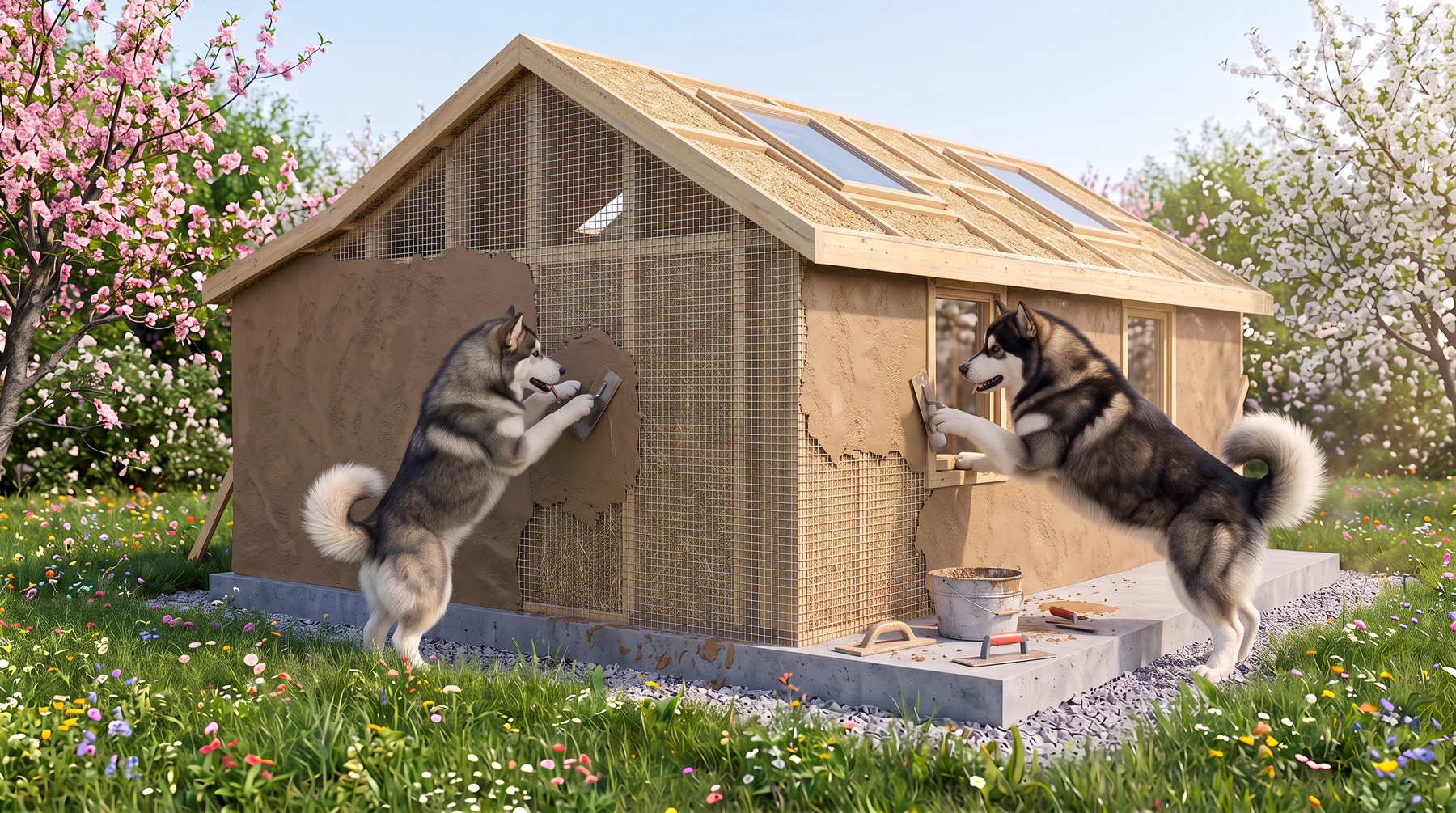
“We finally have the house of our dreams. Now we are enjoying life.”
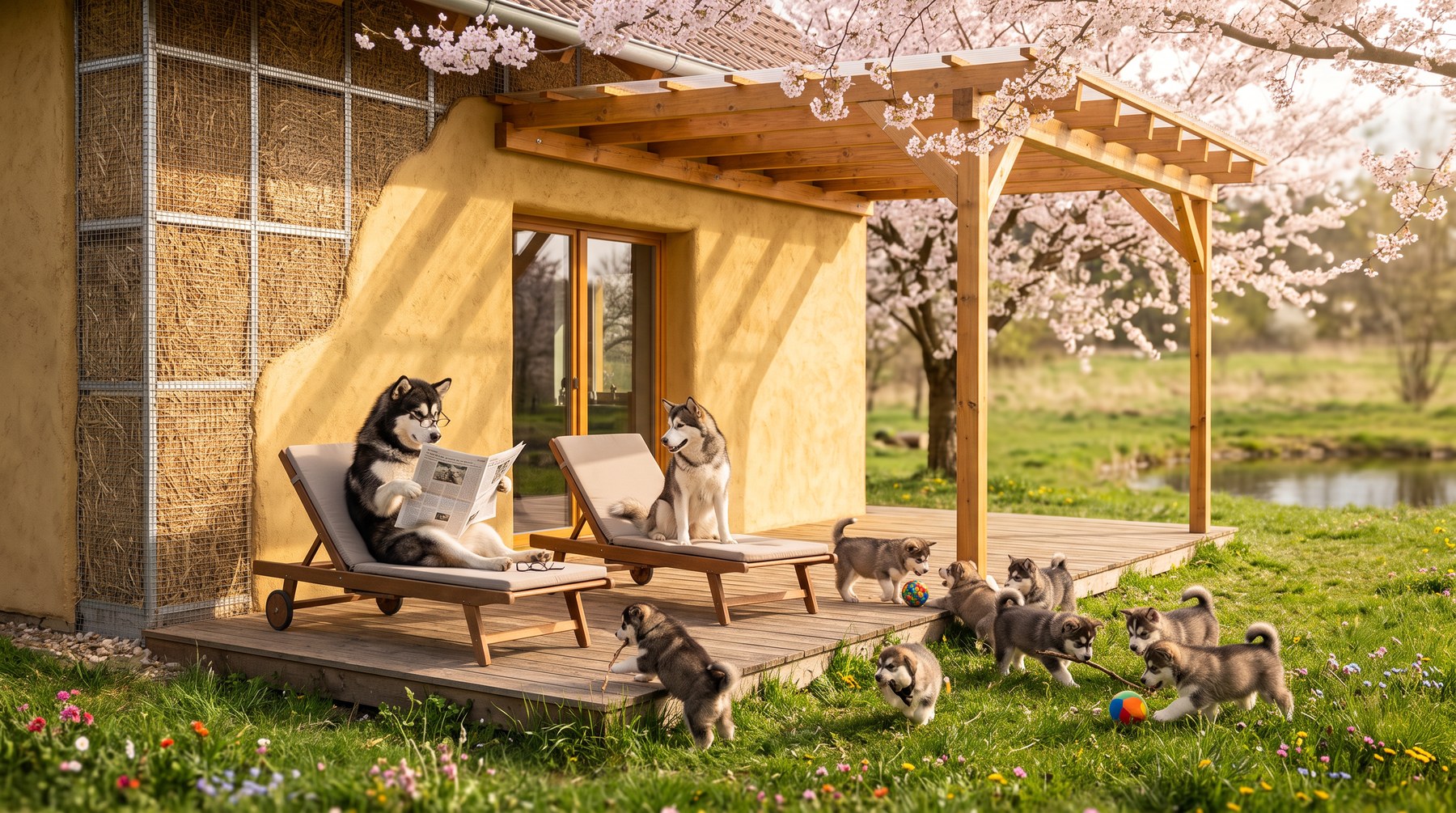
Togo and Alpha are real dogs. The build sequence above is illustration, not a delivered project — our actual completed work is in the portfolio.
Why a Malamute never gets shaved in summer.
A Malamute does not survive +40 °C because its coat is thick. It survives because the coat is dense. A woolly undercoat holds a layer of still air against the skin, and coarse guard hairs above it stop that air being carried away. Still air is a poor conductor of heat — that is the entire trick.
Which is why shaving one in summer harms it. The same trapped air that keeps the cold out keeps the heat out. The coat is not a heater and not a coolant; it is a barrier, and it works in both directions at once.
A straw panel does the same thing at building scale.
Straw is hollow-stemmed and fibrous. Compressed under heat and pressure it becomes a dense board holding millions of small pockets of still air, bound by the straw's own resins with no added glue — a Swedish process first patented in 1935.
So one wall construction answers both a Macedonian January and a Macedonian August, for exactly the reason the coat does, and without a machine running to maintain it. Our declared figures: [U-value W/m²K] and [decrement delay, hours].
Two dogs bred for the Arctic came a long way to find a house built the way they are. They found it in Sosandra.
Begin your build
Tell us your plot. We'll tell you what it costs.
A written specification and an honest number — no pressure, no jargon.